New pallets for beverage loads
Drinks are heavy for their size. Beverage pallets carry dense cases on smaller footprints, ride delivery routes into stores, and take hard knocks from hand jacks along the way.
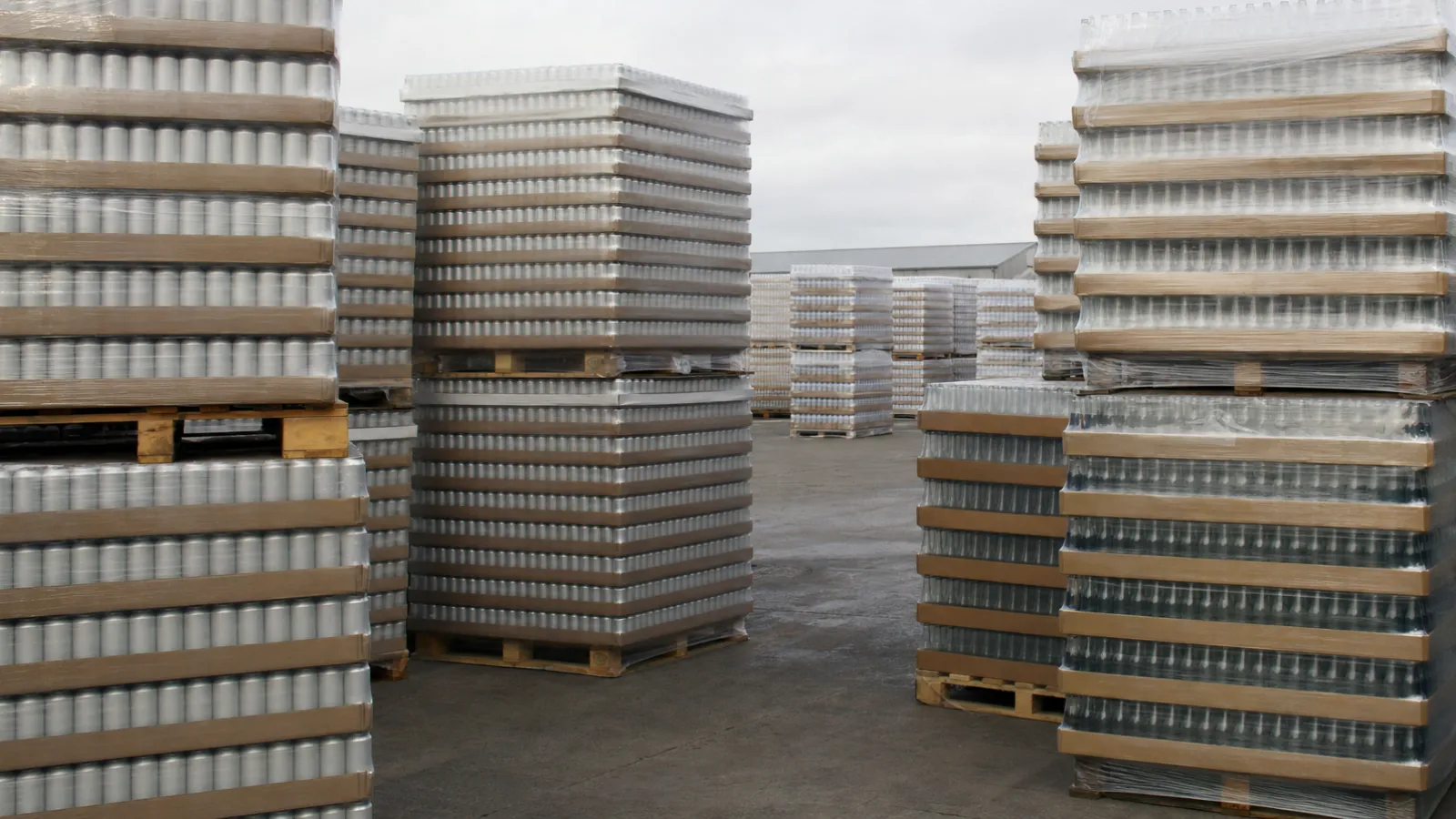 Illustrative image
The load
A layer of canned or bottled drinks weighs far more than a layer of dry goods of the same size, so the beverage trade uses smaller footprints to keep a full pallet at a weight trucks, racks and store floors can take. The 42 x 42 is common in the industry; the 36 x 36 and 48 x 36 are listed for beverage too, and the 48 x 42 for beverage and chemical loads.
Kegs are a load of their own: round, heavy and stacked in tiers, they need a deck with boards under each keg’s rim.
Route delivery
Pallets that go into stores on a route are pushed through aisles on hand jacks, set down on uneven floors and picked from by hand. Strong lead boards and well-nailed corners keep them in service. If pallets come back on the truck, a heavier build pays for itself over many trips; if they don’t, a lighter one will do.
Production lines
At the plant, pallets feed palletizers and stretch wrappers that expect the same pallet every time. A pallet that is a quarter inch out jams a line, so the spec and its tolerances are written down and kept.
Where beverages are made
Beverage manufacturing employed 316,938 people across 16,316 establishments in 2025. California alone had over 63,000 of those jobs, 1.7 times its share of national employment.
| State | Jobs, 2025 |
|---|---|
| California | 63,604 |
| Texas | 24,154 |
| New York | 13,802 |
| Pennsylvania | 13,207 |
| Florida | 12,661 |
| United States | 316,938 |
Questions buyers ask
- Do bottles need a different deck from cans?
- Glass is heavier and more fragile than aluminium, so a load of bottles concentrates more weight on the bottom layer and suffers more from a sagging board. A closer, stiffer deck and slip sheets between layers are common.
- What about kegs?
- Kegs ship in tiers with their rims on the deck. Boards placed under every rim, and lead boards strong enough for the jack that drags a full tier, are the two lines to specify.
- Are display pallets part of this?
- Promotional displays built on small squares often carry drinks into stores. Those need a level top for the display to stand square and a base tidy enough to sit on a sales floor.
- Distilled spirits and wine?
- Cases of glass on pallets, plus barrels on their own racks. Pallets for cases follow the same rules as other bottled drinks.
- Does wrapping change the build?
- Drink loads are usually stretch-wrapped tight, often with a top sheet. Smooth lead boards and flush nails stop the film tearing at the base, which is where a wrapped load most often loosens in transit. Ask for chamfered edges.
Quote beverage pallets
Give the case pattern, layers and weight, and whether pallets come back on the route.
- Industry
- Beverage
- Pallet size
- 42 x 42, 36 x 36 or yours
- Load weight
- Per pallet, in pounds
Not sure of a line? Leave it blank. Size, load weight and quantity are enough to start a quote.