New pallets for pharmaceutical loads
Pharmaceutical warehouses are clean, controlled and audited. Their pallets have to be new, dry and the same every time, so that nothing about them becomes a finding.
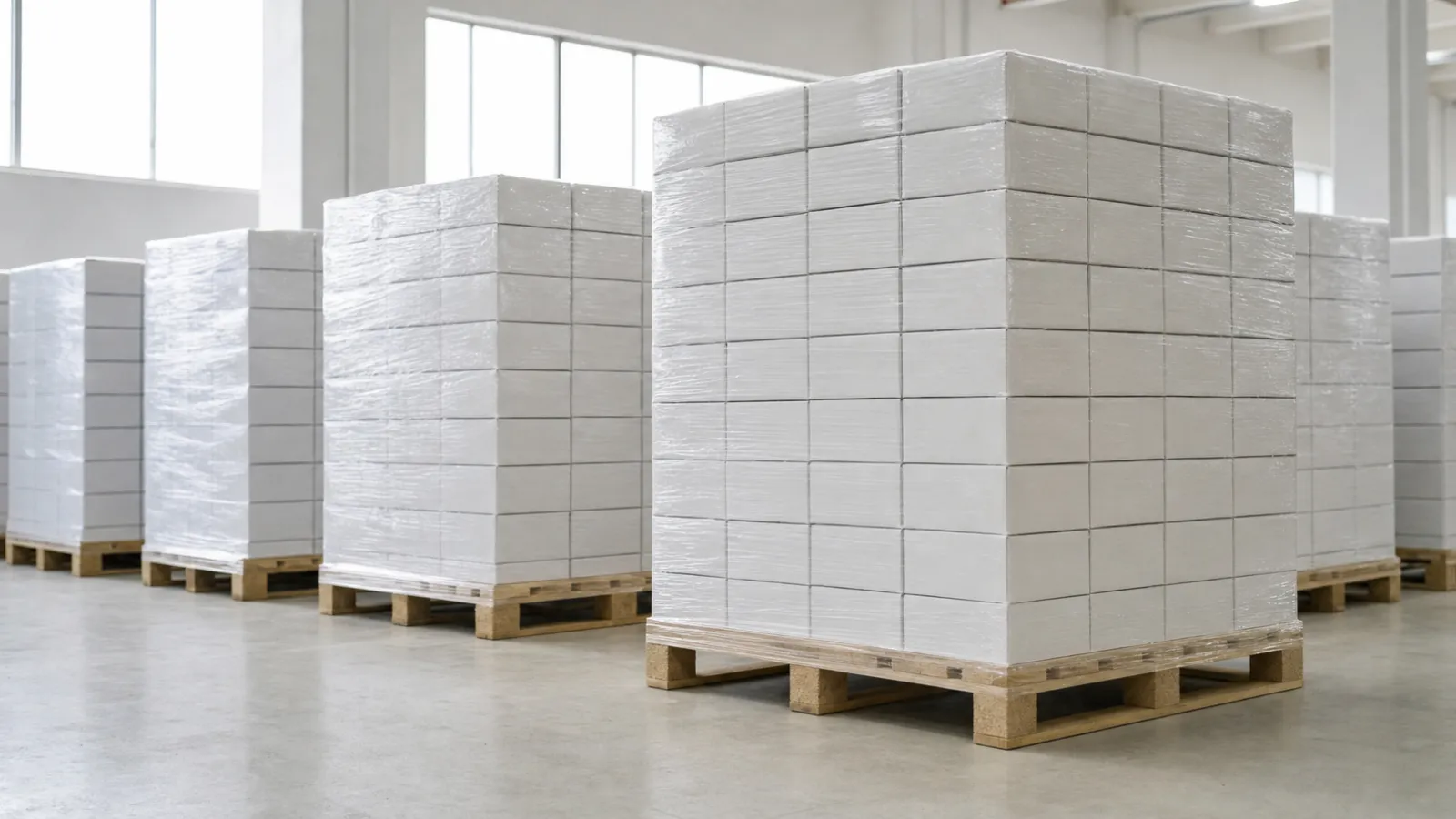 Illustrative image
The load
Pharmaceutical loads are usually cartons of finished product or packaging components, light to moderate in weight, often high in value. Warehouses are temperature-controlled, and quality teams check what comes through the door, pallets included: mold, splinters, loose nails and debris are all reasons to reject a load.
What usually suits it
- Footprint
- 48 x 40 for most loads
- Construction
- Block or notched stringer for four-way entry
- Lumber
- Dried, clean, free of bark
- Consistency
- One written spec, repeated each order
Dry wood
Wood with a moisture content below 20% will not support mold. Pallets for controlled warehouses are specified dry and stored where air moves. If your site has a written wood policy, send it and it goes into the spec.
When wood isn’t allowed
Some clean rooms don’t allow wood at all. If that is your situation we will say so plainly rather than quote a pallet you can’t use.
Where the industry is
Pharmaceutical and medicine manufacturing employed 350,886 people in 2025. In New Jersey it is 3.1 times the national share of employment; Lake County, Illinois, had the most pharmaceutical jobs of any reporting county.
| State | Jobs, 2025 |
|---|---|
| California | 42,575 |
| New Jersey | 30,062 |
| North Carolina | 26,998 |
| New York | 25,087 |
| Illinois | 24,257 |
| United States | 350,886 |
Questions buyers ask
- Do pharmaceutical warehouses accept wood?
- Many do, with conditions: dry, clean, no bark, no loose nails or splinters, and consistent dimensions for racking and automation. Some areas, such as clean rooms, don’t allow wood at all.
- What about temperature-controlled shipping?
- Insulated shippers and cold chain packaging sit on pallets like any other carton. The pallet itself should be dry, so it doesn’t add moisture inside a controlled space.
- Can you document the pallet?
- Every pallet we quote has a written spec: dimensions, members, lumber and fasteners. That is the document quality teams usually ask for.
- Export shipments?
- Pallets carrying medicines abroad need the ISPM 15 treatment and mark. Name the destination country on the request.
- Does pallet size vary for medicines?
- Most use the 48 x 40; some distributors and hospitals ask for smaller footprints that fit their storerooms. Send any receiving requirement with the request.
- What about high-value loads?
- Expensive product deserves a pallet that won’t fail. Ask for a build with margin, and say if the pallet must be the same weight each time for shipping records.
- Medical devices and supplies?
- Boxed devices, syringes and dressings ship like other light cartons, with the same need for clean, dry, consistent pallets.
- Hospital deliveries?
- Hospitals receive through busy docks with limited storage, so smaller, lighter pallets that move by hand jack are often preferred.
- Do quality teams want traceability?
- Some want each delivery traced to a spec and a date. A written sheet with a reference number, matched to the delivery note, gives them that; tell us what records your audit expects, such as a declaration on materials.
Quote pharmaceutical pallets
Give the load and any wood policy your site has.
- Industry
- Pharmaceutical
- Pallet size
- 48 x 40
- Load weight
- Per pallet, in pounds
Not sure of a line? Leave it blank. Size, load weight and quantity are enough to start a quote.