New pallets for steel and coils
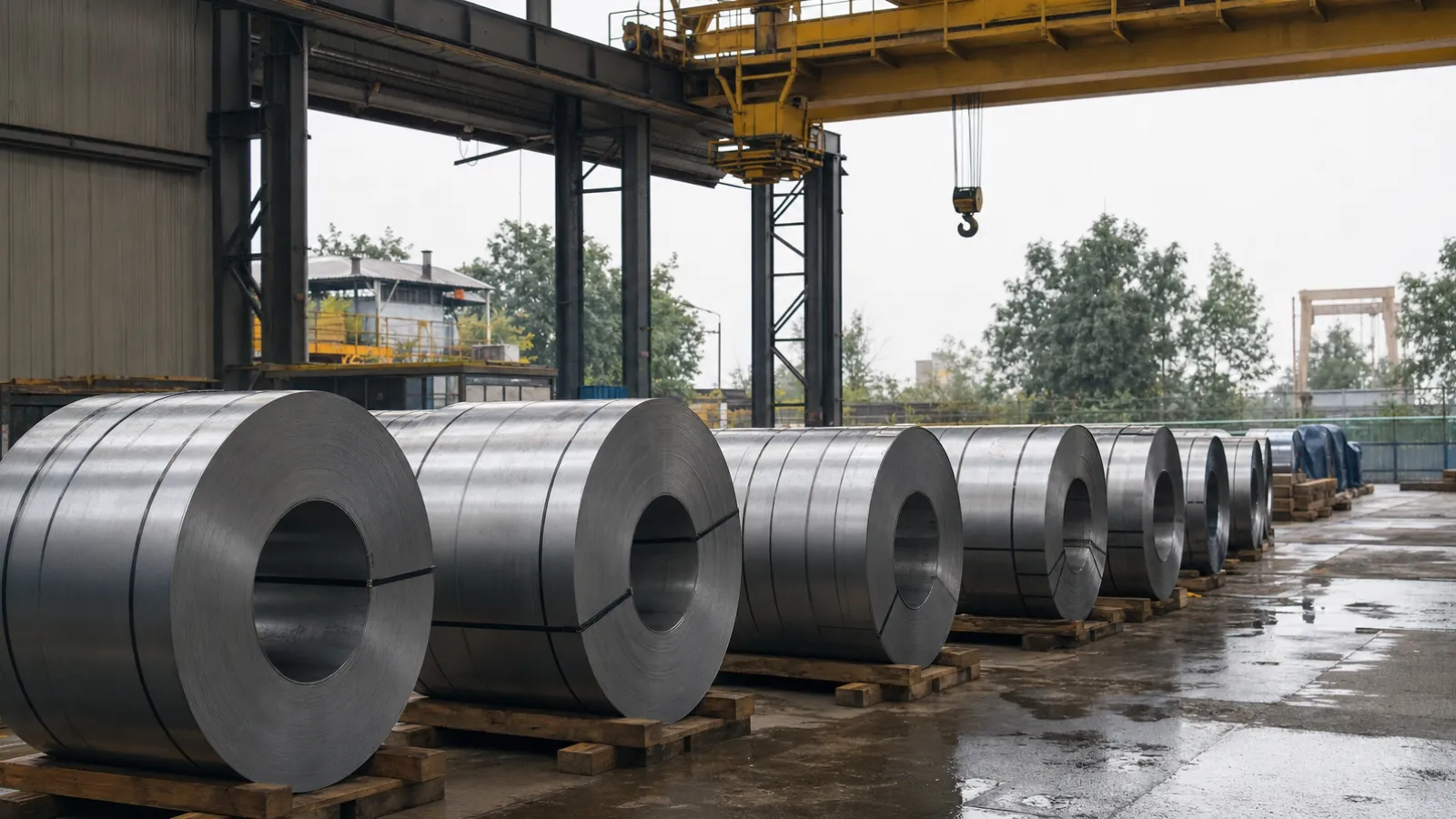
A coil of steel puts tons on a strip of wood a few inches wide. Coil pallets and skids are built around that line of weight, with cradles to keep the coil from rolling.
 Illustrative image
The load
Coils ship either eye to the sky, lying flat, or eye to the wall, standing on edge. Eye-to-wall coils rest on a narrow line along the pallet and want to roll, so the deck carries cradles: shaped blocks or boards that hold the coil in place. Eye-to-sky coils sit on a ring and need a full, stiff deck. Plate and bar are long and dense; they ride on runners spaced to the bundle.
What usually suits it
- Construction
- Skid or heavy pallet; runners or stringers under the coil line
- Deck
- Thick boards, cradles for eye-to-wall coils
- Lumber
- Hardwood
- Footprint
- Set by coil width and diameter
| No. | Member | What it does |
|---|---|---|
| 1 | Deck boards | The only deck: there are no bottom boards. |
| 2 | Lead boards | The outside deck boards, where the load is strapped or bolted near the edge. |
| 3 | Runners | The skid’s stringers, sitting straight on the floor. |
| 4 | No bottom deck | A skid is moved by forks or a jack under the deck and mostly stays put. |
What to send
The coil’s weight, outside diameter, width and eye orientation; for plate or bar, the length, width and bundle weight. Tell us how the coil is banded to the pallet, and whether it is lifted by forklift, a coil ram or a crane.
Why hardwood
Dense hardwood takes the crushing force under a coil’s line of contact and holds nails and bands. Pallet production uses 43% of the hardwood consumed in the US, much of it for heavy industrial pallets. See hardwood and pine.
Skid or pallet
Most coils ship on heavy-duty skids, without a bottom deck, because they are set down once and lifted from beneath the deck. Where coils are racked or conveyed, a pallet with a bottom deck spreads the weight better.
Questions buyers ask
- What is a coil cradle?
- Shaped blocks or angled boards fixed across the deck so a coil standing on its edge can’t roll. Their spacing follows the coil’s outside diameter.
- Wire and cable reels?
- Reels stand on their flanges like short coils. The deck needs boards under each flange and chocks to stop rolling; give the flange diameter, the width and the full weight.
- Does steel stain wood, or wood stain steel?
- Wet wood can mark polished or coated steel. Dried lumber, a barrier sheet, or both are the usual answer; say if the surface finish matters.
- Plate and sheet?
- Flat steel stacks are heavy, even and rigid. Runners spaced to the stack’s length, close enough that plates don’t bend between them, suit them best.
- Can a coil skid be reused?
- Some steel service centers send skids back with the empty truck; many don’t. A reused skid is built heavier, and its cradles must still match the next coil’s diameter.
- How are coils banded to skids?
- Steel or polyester bands pass through the coil’s eye and under the deck or around the runners. Leave room between runners for the bands and edge protectors where they cross the deck.
- Aluminum and copper coils?
- Lighter than steel for their size, but often more easily marked. Padded cradles or a barrier between metal and wood keep the surface clean.
- Tube and structural sections?
- Long bundles ride on long pallets or skids with runners under each band; see long pallets.
- Who decides the cradle angle?
- The coil’s diameter and weight set it. Send both and we draw the cradles so the coil rests low and centred between them.
- Are coil skids weighed?
- Many mills and service centers weigh each coil with its skid for the bill of lading. A skid built the same way every time weighs about the same, which keeps those records simple; tell us if its own weight must stay within a figure.
Quote coil and steel pallets
Give the coil weight, diameter, width and eye orientation.
- Industry
- Steel or coils
- Pallet size
- Set by the coil
- Load weight
- Per pallet, in pounds
Not sure of a line? Leave it blank. Size, load weight and quantity are enough to start a quote.