 Illustrative image
Heavy-duty skids
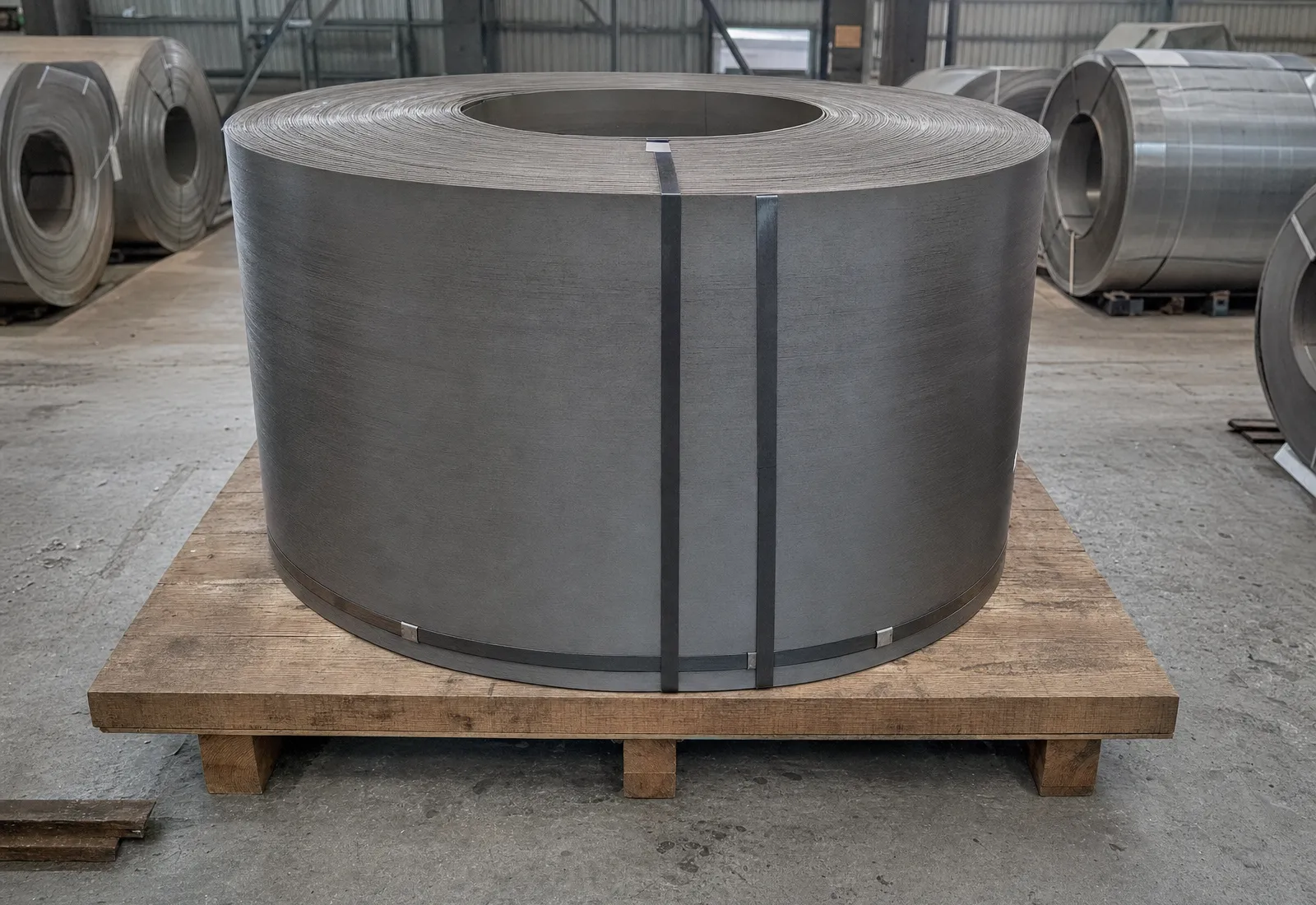
A heavy-duty skid is built for a dense load on a small footprint: coils, castings, dies, stone, transformers. It gets its strength from harder lumber, thicker runners and a deck with little or no gap between the boards.
- Steel coils, dies, castings and stone slabs.
- Loads whose weight sits on a small area of the deck.
- Loads lifted by crane or forks and set down hard.
| No. | Member | What it does |
|---|---|---|
| 1 | Deck boards | The only deck: there are no bottom boards. |
| 2 | Lead boards | The outside deck boards, where the load is strapped or bolted near the edge. |
| 3 | Runners | The skid’s stringers, sitting straight on the floor. |
| 4 | No bottom deck | A skid is moved by forks or a jack under the deck and mostly stays put. |
Dense loads find the gaps
A light load spread over a wide deck bends no single board much. A dense load the size of a dinner table can put thousands of pounds on two or three boards. Heavy-duty skids close the gaps, so the load spreads over more wood, and thicken the boards so each carries more before it bends.
Runners and lumber
The runners carry everything to the floor, so they get the hardest lumber and the most thickness. Hardwood is denser and stiffer than pine at the same size, which is why heavy skids use it. More runners shorten every deck board’s span, so a heavy skid often has four or five under a 48-inch deck.
Coils and round loads
A coil on its side rolls, and on its end it presses a ring into the deck. Coil skids add a cradle, two angled blocks nailed across the deck to hold the coil, or a full-coverage deck for coils that ride eye to the sky. Say which way your coils ride. Steel and coils covers both.
Give us the weight and the contact
The weight alone isn’t enough. Say how big the area is that the load sits on: a coil’s width, a casting’s feet, a slab’s length. That and the weight set the deck and runners.
Contact area
A heavy load that rests on a small contact area is the hardest job a skid does. A coil standing eye to the wall touches the deck along a narrow line; a casting may sit on three small pads. Each of those concentrates tons on a few square inches of board. Thicker boards, hardwood and runners placed directly beneath the contact points spread that force; cradles or blocks keep a round load from rolling. Give us the contact shape as well as the weight.
Lifting heavy skids
Very heavy skids are often lifted by larger forklifts with longer, thicker tines, or by crane. Leave enough height under the deck for the tines you use, and lifting points clear of the load for slings. Give the equipment on both ends of the trip.
Stone, glass and castings
Slabs of stone and sheets of glass travel on edge in A-frames or flat on padded decks; castings and forgings sit on pads or blocks. Each needs runners aligned beneath its bearing points and wood that won’t crush or stain the surface. Describe the material, its finish and how it is braced.
Floors and forklifts
A very heavy skid concentrates its weight under the runners, so the floor, the trailer deck and the forklift must all be rated for it. Check your forklift’s capacity at the load center the skid creates: a long skid moves that center outward and reduces what the truck can safely lift. On flatbeds, loads this heavy are chained down; leave clear gaps between runners where chains pass, and say whether a crane or gantry will unload it at the other end.
Quote heavy-duty skids
The weight, the footprint and the area the load actually rests on.
- Construction
- Skid (no bottom deck)
- Pallet size
- The skid’s footprint, runner length first
- Load weight
- Per skid, in pounds
Not sure of a line? Leave it blank. Size, load weight and quantity are enough to start a quote.