New pallets for building products
Shingles, block, pavers, bagged mortar and stone are some of the heaviest loads a wood pallet carries, and they often spend weeks outdoors in a supply yard before they reach a job site.
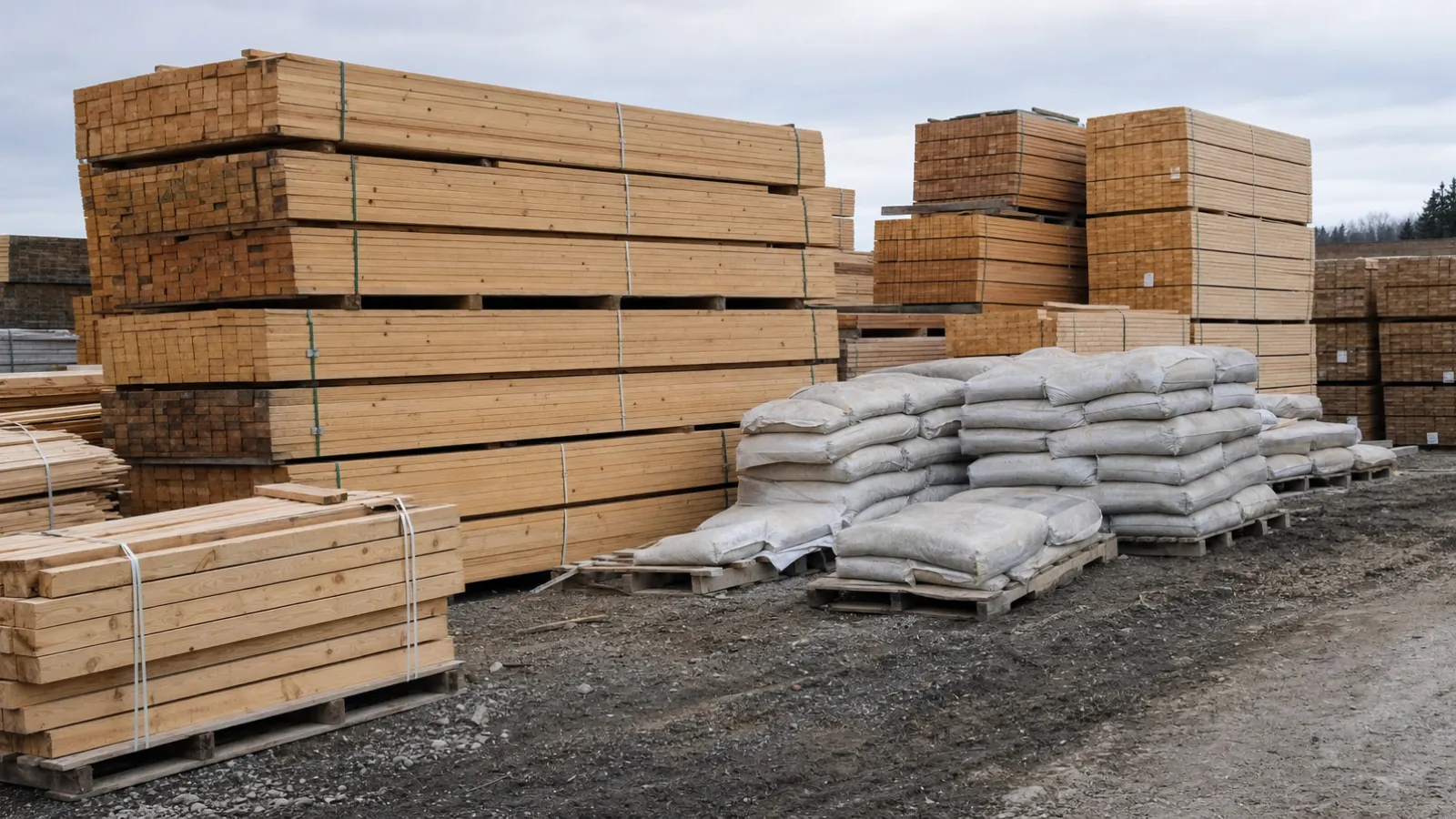 Illustrative image
The load
Building products are dense: a pallet of block, pavers or bagged mix can weigh as much as a small car on a 48 x 40 or smaller. The 48 x 36 is listed for shingles. Panels and boards need long pallets that keep them flat. Many loads are lifted by truck-mounted forklifts at the job site, on rough ground, and set down on whatever is there.
What usually suits it
- Footprint
- 48 x 36 for shingles; 48 x 40 and long sizes for others
- Construction
- Heavy stringer or block; extra stringers for block and stone
- Deck
- Thick boards, coverage to suit bags or cubes
- Lumber
- Hardwood or heavy pine for outdoor storage
Outdoors
A pallet standing in the rain is wet for days, and wet wood is weaker. Thicker boards and a deck that sheds water help, and so does keeping the stack off standing water. If your loads are stored outside, say so.
Job-site handling
Truck-mounted forklifts drop pallets on dirt and gravel. Bottom boards and lead boards take the abuse, so specify them sound and well nailed. For panels and long goods, see long pallets; for the heaviest stone, heavy-duty pallets.
What to send
The product and its weight per pallet, how it is stacked or bagged, the footprint, and whether it is stored outdoors. If you ship the same product weekly, the spec is written once and repeated.
Questions buyers ask
- What about bagged cement and mortar?
- Bags sag into gaps and burst at sharp edges. A close deck, smooth lead boards and boards thick enough not to flex under a full stack of bags are the usual lines. Bagged loads are often stretch-wrapped or hooded, so leave room under the deck for the wrap to tuck.
- Pavers and block?
- Concrete pavers and block are among the densest loads in the trade. They are usually cubed in tight layers and banded, so the deck carries an even but very heavy load; extra stringers and hardwood or thick pine boards suit them.
- Do building products pallets come back?
- Some yards charge a deposit and take pallets back; many don’t. A returnable pallet is built heavier for outdoor storage and repeated trips.
- Windows and doors?
- Glazed units travel upright or flat, padded and braced. Their skids or pallets are long and carry blocking that keeps frames square; send the unit sizes and how they stand.
- Roofing rolls and underlayment?
- Rolls stand on end or lie in cradles. Send the diameter, length and weight, and whether they stand or lie, and the deck is laid out for them.
- What about lumber yards themselves?
- Yards that resell bundled goods want pallets that stack tidily outside and survive rough handling by yard forklifts on gravel.
- Insulation and other bulky, light goods?
- Bales of insulation and foam board are big and light. They want a large footprint, a deck that supports the whole base, and little else: a light build is fine. Exterior storage still calls for lumber that tolerates rain.
- Tile and ceramic?
- Boxed tile is dense, brittle and heavy on a small footprint. A stiff deck with no bounce protects it from cracking in transit.
- Do building products pallets sit outside?
- Often, in yards and on job sites, for weeks. Sun dries and checks the boards; rain swells them. A heavier build suits that life, so say how long pallets stay outdoors. Unwrapped boards turn grey, then weaken at the surface; covering stacks with a tarp or storing them in a shed slows that.
Quote pallets for building products
Give the product, weight per pallet, and whether it stands outdoors.
- Industry
- Building products
- Pallet size
- 48 x 36, 48 x 40 or yours
- Load weight
- Per pallet, in pounds
Not sure of a line? Leave it blank. Size, load weight and quantity are enough to start a quote.