 Illustrative image
Oversized pallets for loads a 48x40 can't hold
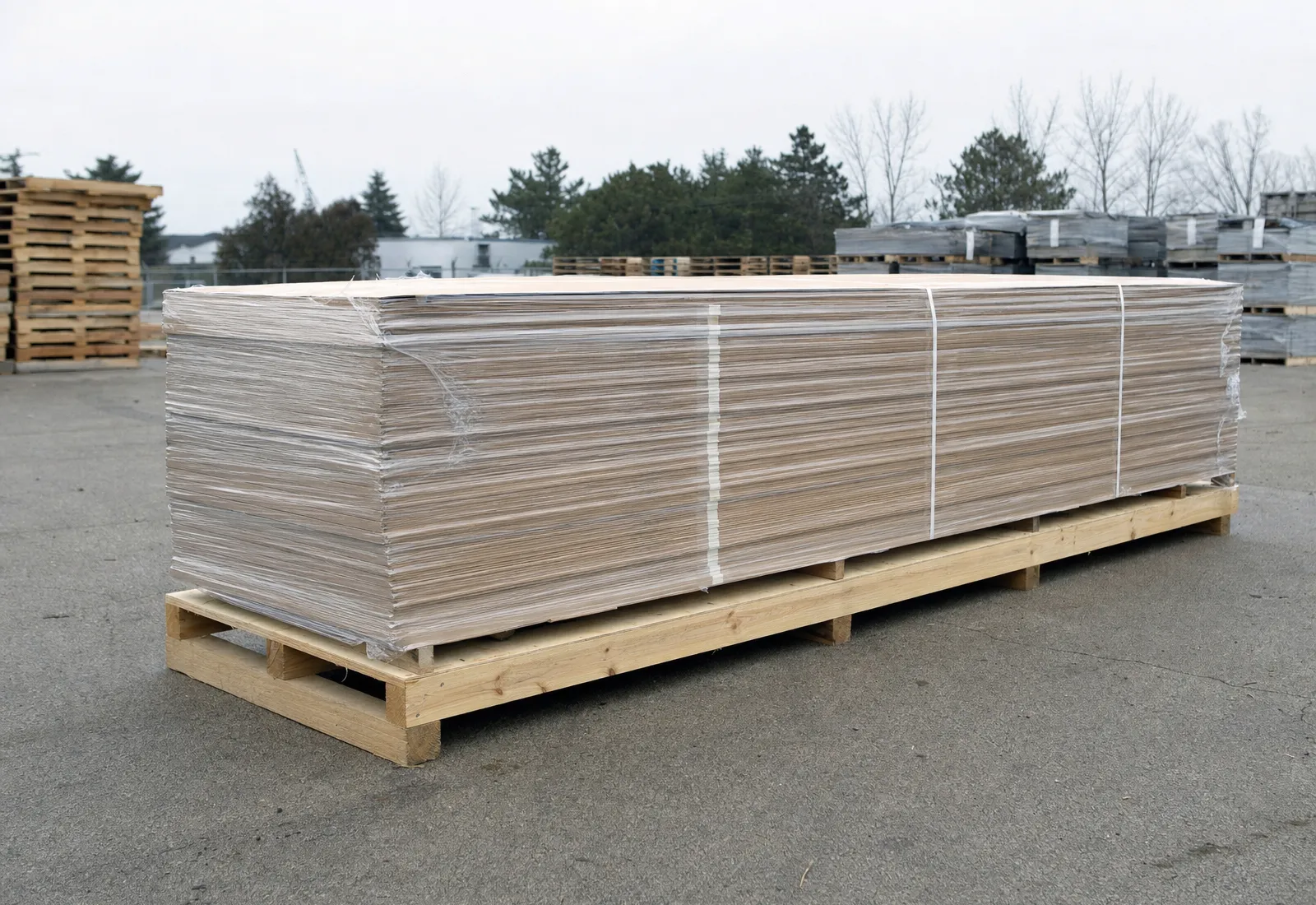
An oversized pallet is any footprint bigger than the load a 48 x 40 can hold without overhang: panels, cabinets, rolls, crated equipment and bulky goods. It is quoted to the product’s size.
- Loads that overhang a 48 x 40 and crush their own edges.
- Wide goods moved by forklift with long forks or a fork extension.
- Footprints set by a customer, a trailer or a container.
| No. | Member | What it does |
|---|---|---|
| 1 | Top deck boards | More of them, closer together, for dense or point loads. |
| 2 | Lead boards | Often specified thicker on a heavy build, since they take the first hit. |
| 3 | Stringers | Four or more, so the deck boards span less between supports. |
| 4 | Bottom deck boards | A fuller bottom deck spreads the weight on a floor or rack. |
Why overhang matters
A load that overhangs its pallet puts its edges in the air. Cartons crush at the corners, panels bow, and the overhang is the first thing a neighbouring load hits in a trailer. Sizing the pallet to the product, flush or an inch inside it, keeps the weight on the deck. Usable surface on a standard American pallet is about 13.3 square feet; past that, the pallet needs to grow.
Stringers and spans
As the footprint grows, the deck boards get longer and so do the spans between stringers. A 60-inch-wide pallet on three stringers leaves each deck board a long unsupported reach, so oversized builds usually add a fourth or fifth stringer. The stringers themselves grow too; past a certain length they need to be thicker to stay straight under the load.
Handling and the truck
Check the forks before the drawing. Standard forks reach under most of a 48-inch pallet but not a 72-inch one, and a deep pallet lifted on short forks tips. Note which side the forks will enter and how long they are. For freight, an oversized footprint can lose floor space in a trailer if it doesn’t divide the trailer width evenly, so tell us how the pallets ship and we will say if a slightly different size packs better.
Sizes we see
There is no standard oversized pallet. 60 x 48 is a common step up, and anything to the product’s measure can be drawn. Write the size stringer length first, and if the long side is the deck-board side, say so.
Weight and stability
Big footprints often carry light, bulky goods, but not always. A wide pallet under a heavy cabinet or a crated machine needs its stringers under the weight, and the load needs to be secured so it can’t slide toward an edge. Give the weight and where the centre of the load sits, especially if it is top-heavy, and how it is banded or strapped. The build follows from that, not from the footprint alone.
Check doorways, dock plates and elevator openings on the route as well. A pallet that suits the product but won’t pass through a customer’s receiving door is an expensive surprise at delivery.
Getting oversized pallets delivered
Large pallets take up more of a trailer, so fewer fit per truck and delivery costs more per pallet. Measure your dock doors, aisles and rack openings too: an oversized pallet that can’t turn a corner in the warehouse costs more than one built a few inches smaller. Check overhead clearance as well when loads stand tall.
Quote oversized pallets
Send the product’s footprint and weight, and the length of the forks that will lift it.
- Construction
- Not sure, or stringer or block
- Pallet size
- The product’s size, or the footprint
- Load weight
- Per pallet, in pounds
Not sure of a line? Leave it blank. Size, load weight and quantity are enough to start a quote.