New pallets by the truckload
For plants and warehouses that ship every week: one pallet, written down once, and supplied the same way on every truck.
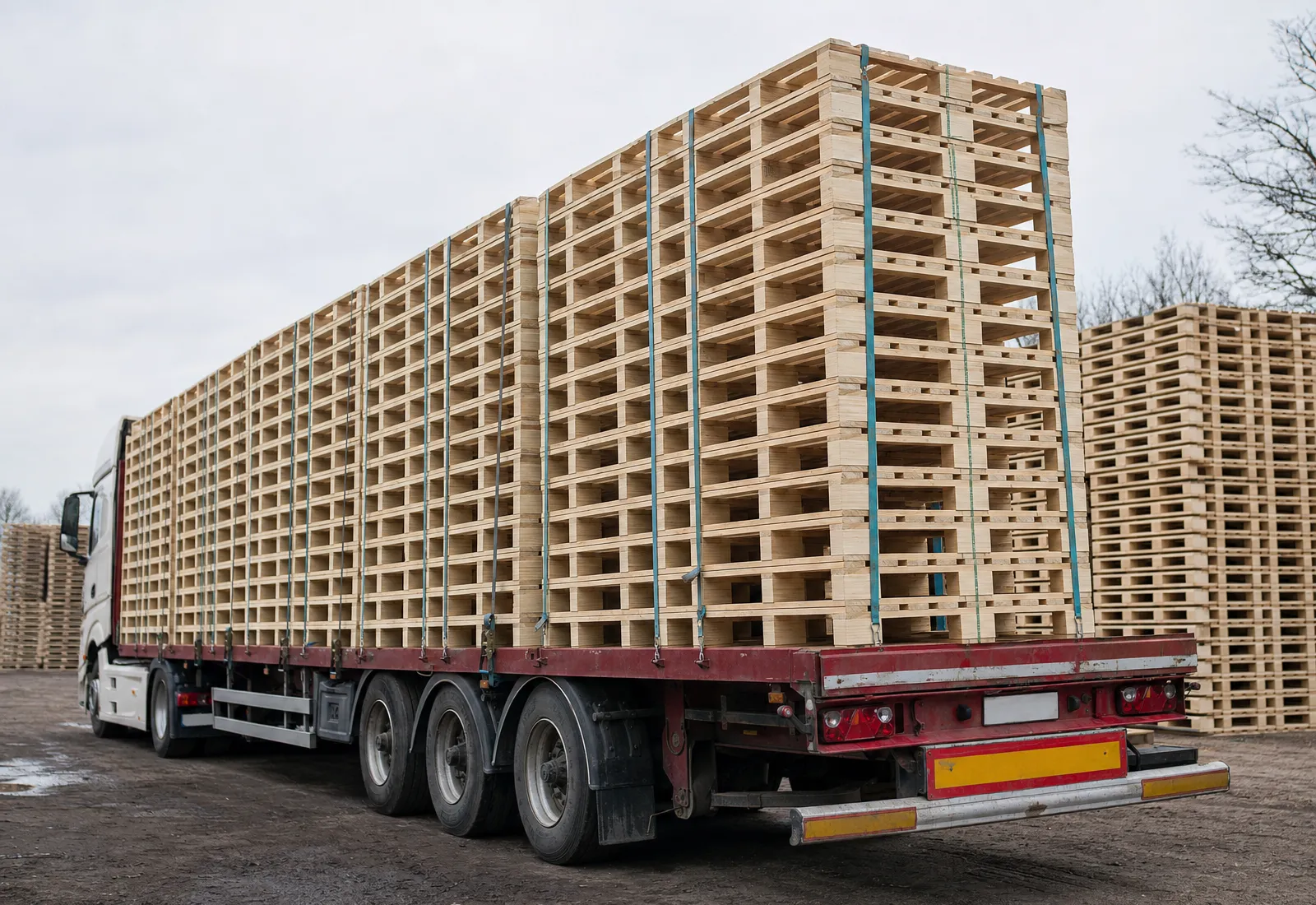 Illustrative image
A plant that ships on pallets every day needs them to be the same every day. The same size, so the stretch wrapper and the racking don’t notice a change; the same lumber and nailing, so a load that rode safely last month rides safely now; and enough of them on the dock that the line never waits.
That starts with a written spec. We write the pallet down once with you, footprint, construction, deck, lumber and any treatment, and quote truckloads against it. Each order after that is the same pallet, and if anything changes, the spec changes first.
Most truckloads are 48 x 40s
The 48 x 40 GMA footprint accounts for 30% of all new wood pallets produced in the United States, and it is the size most standing orders are for. Its build is not fixed, though: deck board count, lead boards, notches and lumber all vary, and the cheapest 48 x 40 is not always the one that suits a racked or heavy load. The 48 x 40 page sets out the options.
What a standing order needs from you
The spec, the number of pallets you use in a week or a month, the ship-to ZIP and the way you receive them: dock height, how many stacks per delivery, and whether they can sit outside. If usage swings with the seasons, give the range. We quote against that, and the quote says what it covers.
Storing new pallets
New pallets stored outdoors or in a closed trailer can pick up moisture and mold. Wood below 20% moisture content won’t support mold, and even slight air movement helps stored pallets. If your stacks will sit closed up, say so and dried lumber is written into the spec.
Not a used-pallet program
Every pallet on a standing order is new. Buyers who can take used or graded pallets, or want pallets collected, need a different kind of supplier. New vs used pallets explains when new is worth paying for.
Planning deliveries
Empty pallets take up a lot of room for what they weigh, and a full truckload is the economical way to move them. Plan deliveries so a truckload arrives before the last stacks run out, not after. If your usage rises at certain times of year, give the peak as well as the average, and the standing order can carry both. Tell us how many stacks you can take at once and whether trucks can back up to a dock, or need to be unloaded on the ground by forklift.
Changing the spec
Products change, customers change their requirements, racking gets replaced. When the pallet needs to change, the written spec is revised and dated first, and the next truckload follows the new version. That keeps old and new pallets from being mixed on your dock without anyone noticing.
Seasonal products, new customers and plant moves are the usual reasons for a revision. Each version carries a date, so anyone receiving pallets can check which one arrived. Receiving staff can compare a delivered pallet against the dated sheet in minutes, with a tape measure.
Receiving a truckload
A full trailer arrives in banded stacks, usually unloaded by your own forklift at the dock. Count the stacks against the delivery note, check a few pallets from different stacks against the sheet, and store them dry and off the ground: rain-soaked new lumber can grow mold before you use it. Use the oldest stacks first. If a delivery date matters, say so with the order; trucks are booked around your receiving hours, and any appointment rules your dock has. A forklift with side-shift, or long tines, makes quick work of tall banded stacks; tell us if you only have a pallet jack, since that changes how a load is built and unloaded.
Quote a standing order
The spec, how many a week or month, and the ship-to ZIP.
- Construction
- The build you use now, or not sure
- Pallet size
- For example 48 x 40
- How many
- Per week or per month
Not sure of a line? Leave it blank. Size, load weight and quantity are enough to start a quote.