New pallets for food and grocery
The 48 x 40 was standardised by grocery manufacturers, and food still rides on it from plant to distribution center to store. What a food shipper adds is cleanliness, dryness and consistency.
 Illustrative image
The load
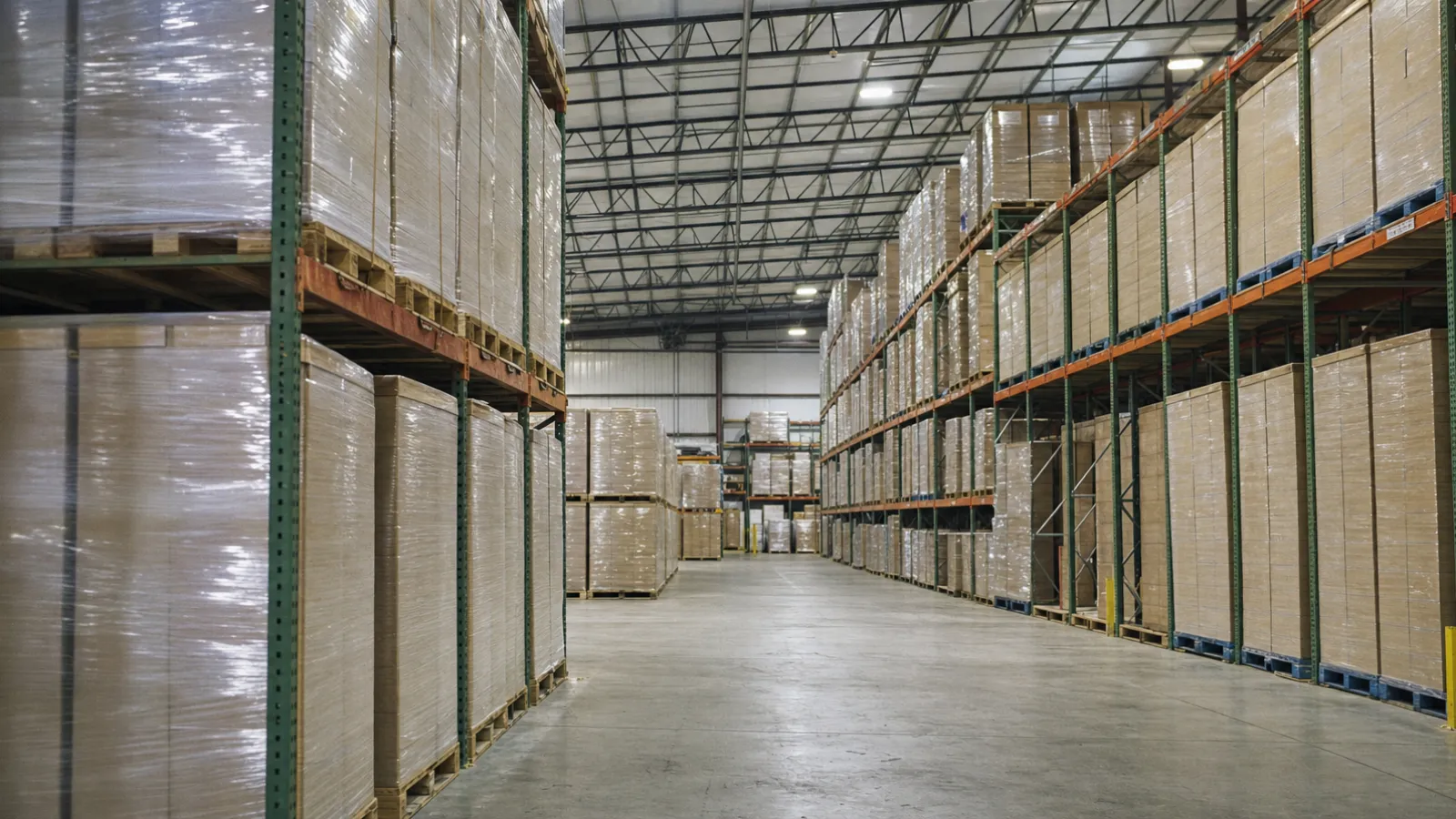
Food plants ship cartons, cases, bags and totes of every weight, from cereal to canned goods, and most of it on a 48 x 40. The footprint is named after the Grocery Manufacturers Association, whose members adopted it; nine 16 x 12 inch cartons fit on each layer. Distribution centers rack it, cross-dock it and send it to stores, so the pallet must suit racking, conveyors and hand jacks all on one trip.
What usually suits it
- Footprint
- 48 x 40 for most loads
- Construction
- Notched stringer for partial four-way entry, or block
- Deck
- Enough coverage for cartons not to sag into gaps
- Lumber
- Dry, clean, free of bark
Clean and dry
New pallets start clean, which is part of why food shippers buy them. Mold is the common complaint: wood below 20% moisture content won’t support it, and even slight air movement in storage helps. Heat-treated pallets loaded into a closed trailer while still warm are prone to it. Say if your pallets go into a plant with sanitation rules.
Traceability
The FDA’s Food Traceability Rule asks food businesses to keep records for listed foods and share them within 24 hours of a request; enforcement is not expected before July 2028. A consistent pallet makes a consistent unit load, which is easier to track.
Where food is made
Food manufacturing employed 1,775,008 people in 2025, and grocery wholesale another 829,364. In Nebraska, Arkansas and Iowa food plants make up more than 4.5% of all private jobs.
| State | Jobs, 2025 |
|---|---|
| California | 166,660 |
| Texas | 112,088 |
| Illinois | 98,300 |
| Pennsylvania | 82,538 |
| Wisconsin | 81,993 |
| United States | 1,775,008 |
Questions buyers ask
- Do grocery distribution centers take any 48 x 40?
- Many accept a range of builds but reject pallets that are broken, wet, moldy or out of square. Some publish their own receiving standards; if your customer has one, send it.
- Should food pallets be heat-treated?
- Domestic food freight doesn’t require it. Exports do, under ISPM 15. Heat treatment doesn’t prevent mold, so for food the more useful line is dried lumber.
- Are food pallets inspected?
- Receivers and auditors look for broken boards, protruding nails, mold, bark, stains and pests. A new pallet built from dried, clean lumber passes that inspection more easily, and the written sheet shows what was ordered.
Quote food and grocery pallets
Give the load, the count per week and any sanitation rules.
- Industry
- Food or grocery
- Pallet size
- 48 x 40
- Load weight
- Per pallet, in pounds
Not sure of a line? Leave it blank. Size, load weight and quantity are enough to start a quote.